
A Marriage Losing Its Common Ground
Lady Chatterley's LoverThis flow traces the gradual unmaking of Connie and Clifford’s marriage as shared intellectual habits give way to incompatible needs.
increasing Bearing strength in each event
 decreasing
Bearing strength in each eventdecreasingIntimacy Beyond Sex
Intimacy Beyond Sex
A wartime union
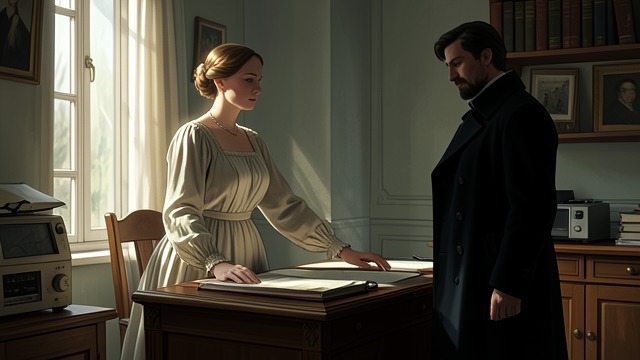
Constance Chatterley and Clifford Chatterley marry while the war still shapes their lives. Clifford’s virginity and limited interest in sex make their closeness seem to depend on something beyond physical satisfaction.
Connie accepts this arrangement and values the sense of companionship between them. She hopes that a child might also secure her place within the Chatterley family.
An untested bond
The honeymoon gives the couple little time to develop a durable shared life before Clifford is gravely wounded. Their idea of intimacy begins under extraordinary conditions, with ordinary bodily partnership left largely unexamined.
The marriage’s early ideal of companionship will later be used to justify a life that neither can fully inhabit. Its apparent strength conceals an absence that becomes harder to ignore.
Wragby’s Daily Habit
Wragby’s Daily Habit
A life organized around Clifford
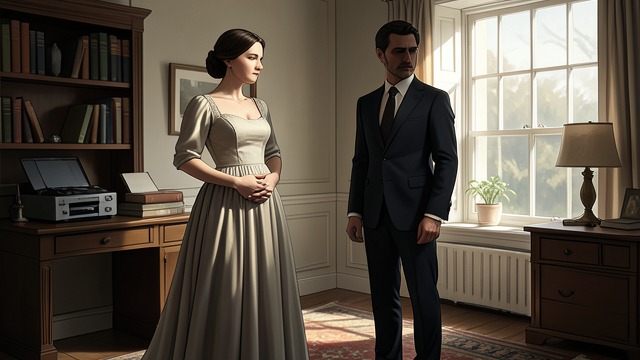
At Wragby Hall, Connie helps Clifford write stories, receives his guests, and tends to the personal needs his disability creates. Their days acquire a predictable rhythm built around his work and conversation.
The arrangement offers dependency without reciprocal bodily intimacy. Clifford needs Connie’s presence to feel secure, but she increasingly senses that he does not reach her as a physical person.
Habit as a substitute
Clifford describes the slow continuity of married life as more important than occasional sexual experience. Connie can follow his reasoning in the abstract, yet she doubts that their continued routine gives her a life of her own.
As time passes, the shared habit becomes a structure that holds her in place. The stability that Clifford values gradually registers to Connie as confinement.
The Final Refusal
The Final Refusal
Two accounts of marriage
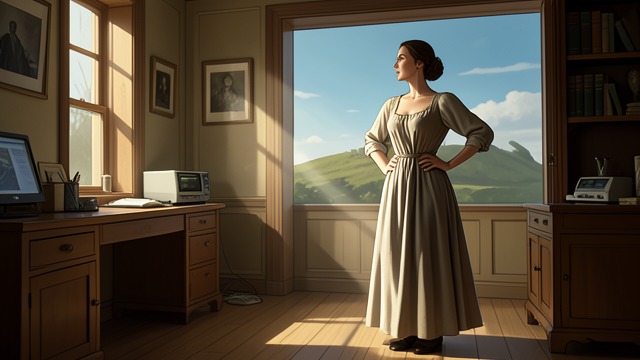
Connie tells Clifford that she loves Mellors and wants to leave. Clifford insists that his marriage and the established order of Wragby should continue regardless of her feelings.
He treats Connie’s changed intention as a whim, while she sees continued cohabitation as an impossible demand. Their conflict exposes the difference between legal possession and an actively chosen relationship.
An unfinished separation
Clifford refuses to grant a divorce, and Connie leaves anyway. Her departure ends their shared domestic life but leaves the formal bond unresolved.
The novel does not reconcile their competing claims. It shows a marriage whose habits survive as legal and emotional pressure after its reciprocal life has ended.
During their honeymoon in 1917
After the couple return to Wragby in autumn 1920
Near the novel’s ending, during the conversation in Clifford’s room
